Bad breath, also known as halitosis, can be one of the first noticeable signs that something is not quite right inside your pet’s mouth. Dental disease is one of the most common causes, although changes in their breath can also be linked to other health problems.
If your pet’s breath has become noticeably unpleasant, changed suddenly or is accompanied by other symptoms, it is a good idea to arrange a veterinary check-up.
Is bad breath normal in dogs and cats?
Although many owners become used to their pet having slightly smelly breath, consistently unpleasant breath should not simply be accepted as a normal part of getting older.
One of the most common reasons for bad breath is a build-up of plaque and tartar on the teeth. Plaque is a sticky film containing bacteria that develops naturally on the tooth surface. If it is not removed, it can harden into tartar and contribute to inflammation of the gums and periodontal disease.
Dental disease can be uncomfortable and sometimes painful, but pets are often very good at hiding oral discomfort. Dogs and cats may continue eating despite having significant problems with their teeth or gums, so bad breath can sometimes be one of the earliest signs owners notice.
Signs your pet may have dental disease
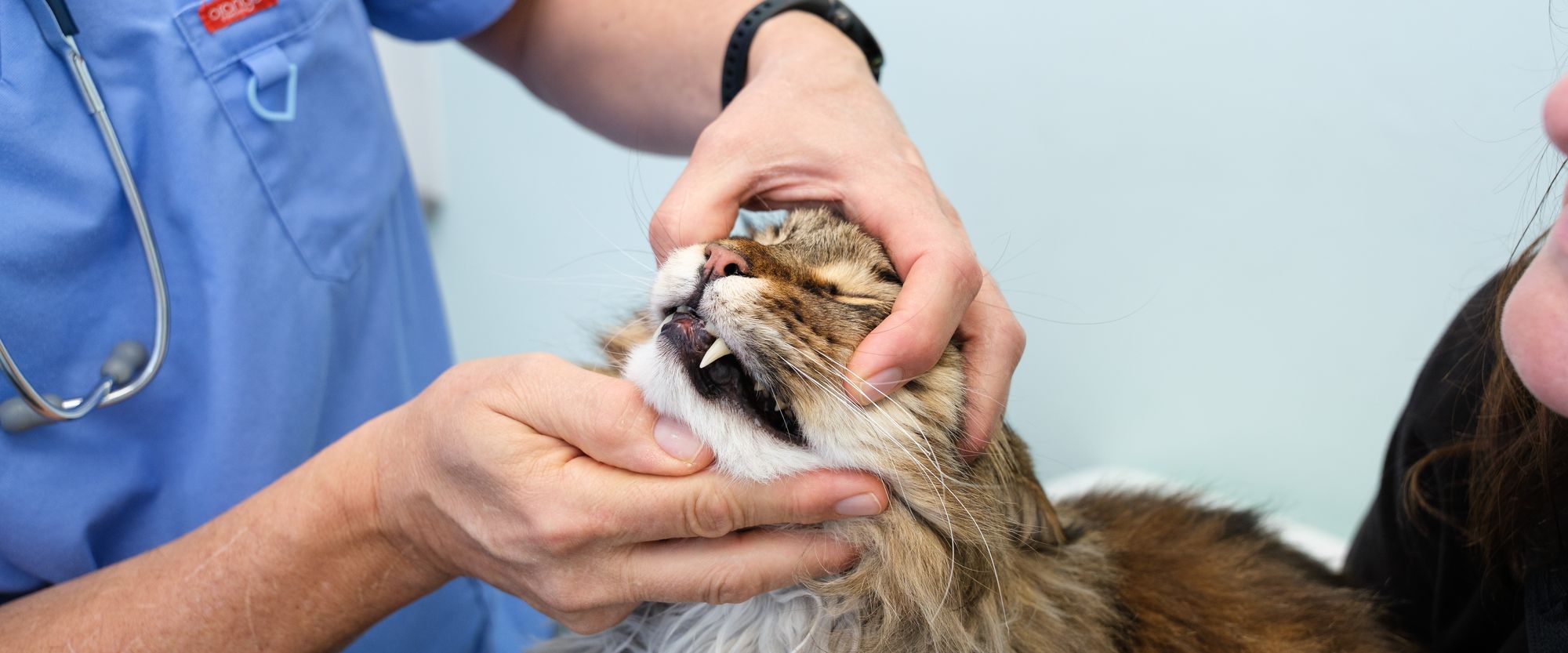
Bad breath is not the only symptom to look out for. Take a closer look at your pet’s mouth regularly if they are comfortable with you doing so.
Signs that may suggest a dental problem include:
- Yellow or brown tartar on the teeth
- Red, swollen or bleeding gums
- Drooling more than usual
- Pawing or rubbing at the mouth
- Dropping food while eating
- Chewing predominantly on one side
- Difficulty eating harder foods
- Reduced appetite
- Loose, broken or missing teeth
- Swelling around the face or jaw
- Blood in the saliva
Changes in behaviour can also be important. A pet with a painful mouth may become quieter, less interested in playing with toys or reluctant to have their face touched.
If you notice any of these signs alongside bad breath, arranging a veterinary examination is recommended.
What else can cause bad breath?
Dental disease may be the most common explanation, but it is not the only possibility.
Something trapped inside the mouth, such as a small piece of stick, bone or other material, can cause inflammation or infection and produce an unpleasant smell. Broken teeth, tooth-root infections, mouth ulcers and oral growths can also cause bad breath.
Occasionally, a noticeable change in the smell of your pet’s breath can be associated with illness elsewhere in the body. For example, kidney disease can sometimes cause an unusual ammonia-like smell, while uncontrolled diabetes may cause breath to smell unusually sweet.
These conditions usually cause other symptoms too, so changes such as increased drinking, increased urination, vomiting, weight loss or changes in appetite should always be discussed with your vet.
When should you book an appointment?
If your pet has persistent bad breath, particularly if it has become worse over time, it is worth booking a check-up rather than waiting for more obvious symptoms to develop.
You should arrange an appointment sooner if bad breath is accompanied by difficulty eating, obvious mouth pain, bleeding, facial swelling, excessive drooling or a sudden change in your pet’s general health.
During an examination, your vet can assess your pet’s teeth, gums and the rest of their mouth and advise whether any further investigation or dental treatment may be required.
We have dedicated dental facilities within the practice and can discuss the most appropriate options based on your pet’s individual needs. Our approach is centred around assessing each patient individually and talking you through the options available.
How can you help protect your pet’s teeth?
Good dental care at home can make a significant difference to your pet’s oral health.
Tooth brushing is generally considered the most effective way to reduce plaque. Ideally, brushing should become part of your pet’s daily routine using toothpaste specifically designed for pets. Human toothpaste should never be used, as some ingredients may be unsuitable or harmful to our pets.
If your pet has never had their teeth brushed before, introduce it gradually. Start by getting them comfortable with having their lips and mouth gently handled before slowly progressing to a pet toothbrush or finger brush.
Dental diets, chews and other oral-care products may also be useful for some pets, although they should complement rather than replace regular checks and brushing where possible.
Our veterinary nurses can also provide dental-care advice, including guidance on what you can do at home to help keep your pet’s teeth healthy for longer.
Don’t wait for your pet to stop eating
One of the most important things to remember about dental disease is that pets do not always make their discomfort obvious.
A dog may still enthusiastically approach their dinner bowl, and a cat may continue eating despite having painful teeth. By the time eating becomes noticeably difficult, an oral problem may already be quite advanced.
Keeping an eye on your pet’s breath, teeth and gums can therefore help you notice changes earlier.
If something smells different, looks unusual or simply does not seem right, it is always worth asking.
Worried about your pet’s breath?
Bad breath may seem like a minor issue, but it can provide an important clue about your pet’s oral and general health.
If you have noticed persistent bad breath, tartar, sore gums or any changes in the way your pet eats, contact our team to arrange an appointment. We can examine your pet’s mouth, identify any areas of concern and discuss how best to keep their teeth and gums healthy and comfortable.