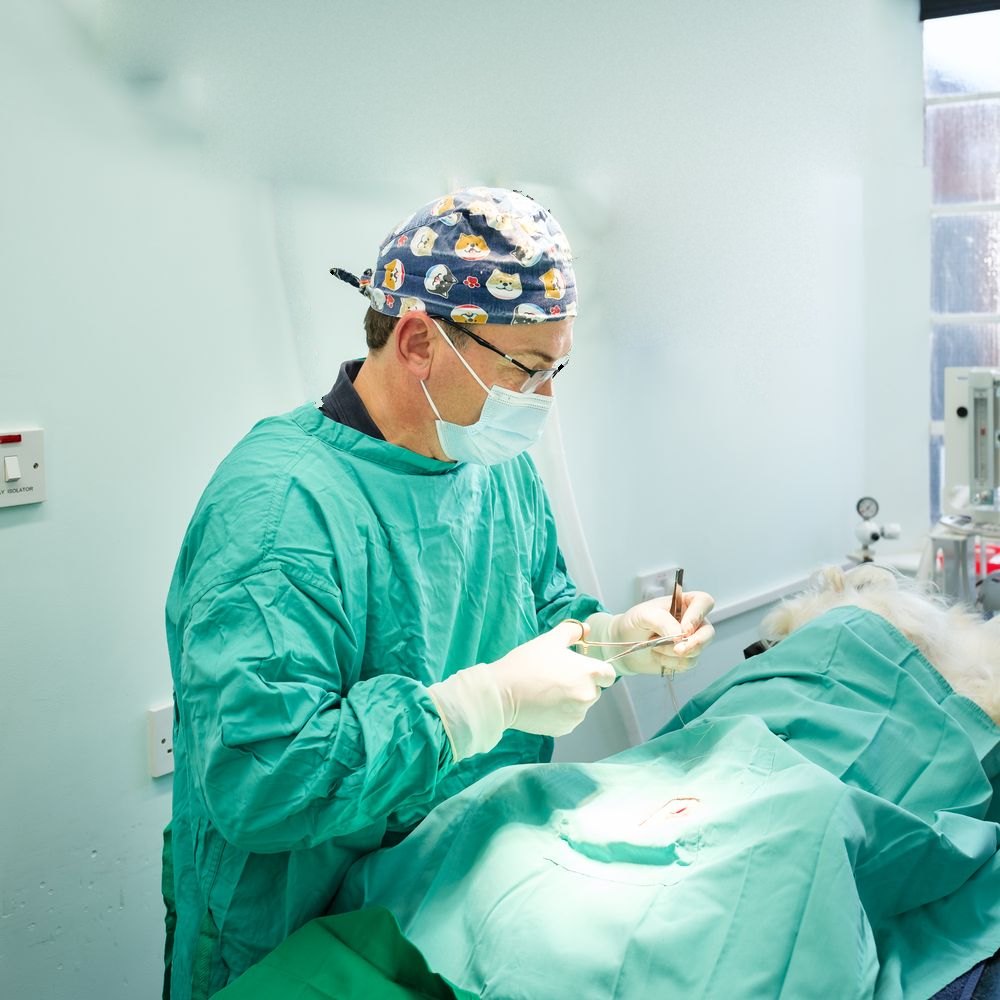
Spaying (females) and castration (males)
Neutering is a routine veterinary procedure that helps prevent unwanted pregnancies and can offer health and behavioural benefits. We can guide you on when a suitable time would be to have your puppy or kitten neutered.
In March 2026 the British Veterinary Association (BVA) and the British Small Animal Veterinary Association (BSAVA) updated their joint guidance on neutering. It moves away from a one-size-fits-all approach. Cats are best neutered from four months of age, before they reach sexual maturity. For dogs, the guidance favours waiting until they are physically mature, usually between 12 and 24 months depending on breed and size, as this lowers the risk of some bone and joint problems later in life. Read the BVA's announcement.
Dog neutering
Bitch spays (dog spays)
Bitch spays are carried out from 12 months of age but this is dependent on the size and breed of your pet. If your dog has already had a season, we would require them to be midway between seasons before we neuter, approximately three months after finishing the season. We treat each pet as an individual, so please contact the surgery and we can discuss the options based on your pet's needs.
We can also discuss the suitability of laparoscopic (keyhole) spays.
Dog castrations
Dog castrations are carried out from 12 months of age but this is dependent on the size and breed of your pet. Castration can sometimes be used to help with behavioural issues. We treat each pet as an individual, so please contact the surgery and we can discuss the options based on your pet's needs.
Chemical castration
Chemical castration for dogs is also an option we offer. This is an implant that can last six or 12 months. This can sometimes be used to see if surgical castration may be beneficial for behavioural issues. If this is something you would like to consider, then please contact the surgery to discuss the suitability for your pet.
Cat neutering
Cat castration
Cat castration can be done from four months of age. Castration can help reduce fighting and roaming, lowering the risk of injuries and the spread of infectious diseases such as feline immunodeficiency virus (FIV). It also reduces the urge to seek out females, helping to keep your cat closer to home. It is recommended to keep your kitten in until they have been castrated.
Cat spays
Cat spays can be done from four months of age. Having your cat spayed prevents unwanted pregnancies and helps reduce the risk of certain reproductive health problems. It also prevents them from coming into season, avoiding the associated calling, restlessness and attempts to find a mate.
Before and after surgery
Before surgery, we will carry out a full health check and explain the procedure, anaesthesia, pain relief and the recovery process, allowing you to ask any questions you may have. Following your pet's surgery, we will provide detailed aftercare advice and any necessary follow-up checks to support a safe and comfortable recovery.
Whether you are looking to have your puppy or kitten spayed or castrated, please contact the surgery with any questions. Our experienced team will be happy to advise you on the most suitable options for your pet.
What it costs
- Cat castration, including pre and post operation examinations: £87
- Cat spay, including pre and post operation examinations: £103
- Dog castration, including pre and post operation examinations: from £220
- Dog spay, including pre and post operation examinations: from £252
Dog prices are a guide only. For a more accurate estimate, call our team on 020 8845 8144.